About Me

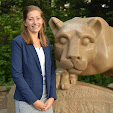
My photo
A farmers daughter and Penn State Agricultural and Extension Education student, I enjoy laughing (a lot actually), capturing Lancaster county beauty in the form of an Instagram and pursuing the heart of my Savior. This is authentically me, simply put: my adventures, my passion and my journey of becoming an Agriculture Educator.
Showing posts with label classes. Show all posts

Friday, April 22, 2016

The End of an Advent{HERR}...

Somehow, somewhere we ended up here. On the last day, of my last semester of college. Well almost, here I am on the last day of my student teaching internship. I'm sitting here typing while my students are decorating the room with balloons to celebrate my departure, diligently working on tying blankets for an FFA community service project and in anxious anticipation for the wings that are arriving for lunch.

Here's the thing, I'm counting myself really blessed. Really blessed because I had the opportunity to serve these students for the last 60 some days. Really blessed because I have had the privilege to work alongside of two fantastic mentors in a community that is supportive of the awesome things that are happening here.

This moment is quite bittersweet actually. I am feeling relieved because I made it. I made it through this capstone semester, the most challenging, stretching semester of them all. I am feeling nervous because of big life changes lie ahead - graduation, weddings, job searches. I am sad because this chapter is over, my days with these kids have come to an end.

This student teaching internship has taught me an immense amount of things in 15 short weeks. Things like...

  • Every student deserves a champion. Every single one, regardless of their background, regardless of their ability level. And I want to and need to be that for them.
  • The diversity of this job is crazy. But it's crazy good. I love that I won't always know it all. I love that challenge. 
  • School politics. They're no fun. But regardless of how frustrating that can be, you can't let it get you down. Don't let it deter your focus from your main priority - students. 
  • Technology integration is important and is changing the way we can deliver content. Sometimes it doesn't work, sometimes students don't want to utilize it, sometimes we forget that students aren't actually technology natives. 
  • Purposefulness is pivotal. It's the why we're doing what we're doing; the where we're going, where we've been conversations that help establish rapport and aid in student success and motivation
  • The experiential learning that uniquely happens in the agriculture education classroom is so powerful. I surveyed my students as I wrapped classes with them and not surprisingly, with astounding popularity, students crave and enjoy hands-on learning. 
  • Clarity of instruction will be a never ending area of improvement. Moving forward into my own program, I want to continually strive to seek strategies to better myself in that area of effective teaching
Obviously I've learned much more then all of that. This has been the most stretching, growing, challenging, amazing semester. Quite possibly the most important thing I've learned this semester is that I chose the right profession. There were plenty of days in this four year journey where I questioned if it was worth it, questioned if I really had what it takes to serve students as their agriculture educator. But this semester solidified it. Somedays I left Midd-West exhausted and overwhelmed, but most days I left smiling because I love what I do.
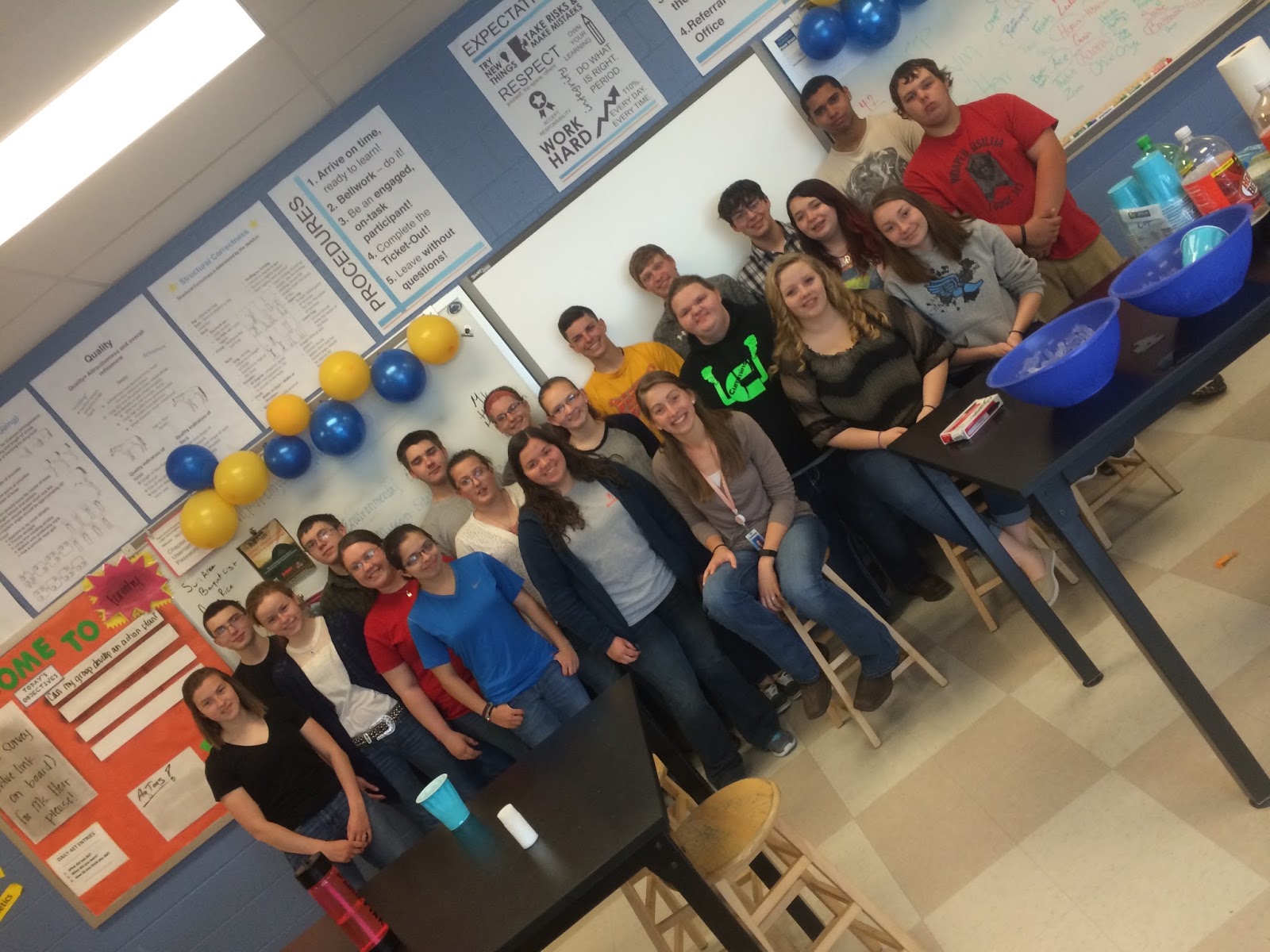
Simply put, it hardly seems real that graduation is only few days. It hardly seems real that this student teaching internship has come to a close. 

Simply put, I count myself so privileged to have the opportunity to watch these students grow and succeed. I count myself privileged to earn a Penn State education, to serve as temporary member of of the Midd-West Agriculture and Engineering Department, to be joining a profession with a nationwide network of passionate agriculture educators.

Until the Next Advent{HERR}, K. Janae

Thursday, April 21, 2016

Teac{HERR} Tales: Don't Break Your Benjamins!

There's this one thing that serves as the grease to the wheels of agriculture education programs. It's the budget. Finances, like in all facets of life, play a huge role influences abilities to function as a productive unit or individual.

This post goes out to all those new and upcoming Career and Technical Educators out there. We sit in a unique seat. Our budget goes further then index cards, highlighters and textbooks. We have equipment needs, repair needs, plant needs, transportation needs and the list goes on and on. I am going to share the top three things regarding budgets and school funding in the realm of Career and Technical Education utilizing advice from two seasoned agriculture educators and the business manager here at Midd-West High School.

1. Relationships

  • Initiate and Invest. Relationships like the Secretary that oversees your accounts, business managers and administrative assistants play a huge role in the success of the financial aspects of the program. Initiating and investing into these individuals help get them on your side is will be powerful down the road. Give them flowers, FFA apparel... long story short, make them feel appreciated. I was also recommended to send students to them first, they enjoy the opportunity to help them learn through the process and see their successes. In that though, these relationships are delicate in the sense that your emergency does not constitute as their emergency. Ever. The district office is a business office, they run on business hours, not school hours. They're "slow" season is during the summer, take the time to work with them then!

2. Fundraising

  • Identify multiple funding sources. Whether that is through program fundraisers sponsored by the FFA or through an alumni association, access to resources beyond simply school funding can help programs ensure a "safety net" for years when funding may be questionable. When solidifying these multiple funding sources, it is important to keep a creative mindset. Never say no to an opportunity that may result in an profit. These multiple sources help teachers plan for success. These efforts also allow for a unique opportunity to keep your program visible in your community. When those external groups see the value see the power of the program they will seek out ways to support. My cooperating teacher also gave some awesome advice, the school board approves each major financial decision of the program. This helps build rapport and maintain program support on an administrative level.

3. The Program Budget

  • Much of this process is dependent on infrastructure at the local level, but there are many general terms and themes that arise across the board. There are potentially up to three sources of external funding that the school (with an agriculture program) can secure - Perkins (federal funding), Vocational Subsidies (state funding) and Fair Funds (state funds). These funds will come a year late and because of that, is why careful recording of program concentrators, students who take at least 2 agriculture classes a year, plan to continue taking agriculture coursework and have set an agriculture career objective, is so important. The program budget will be itemized into subcategories that can range from equipment repairs, propane for the greenhouse, NOCTI testing, etc. Purchase orders play a big role in billing process throughout the year, because of the line-item system in the budget. Again, another important reason that those relationships with the secretary is so important!

Simply put, plan ahead - budgets get completed a year in advanced. You won't really know what you'll need next year but with careful planning, good record keeping and efficient communication successful budgets can be possible!

Simply put, as always, relationships are easily the most important factor in this situation. Establishing and working to maintain relationships with the correct parties will help ensure effective and efficient use of program dollars.

Until the Next Teac{HERR} Tale, K. Janae

Wednesday, April 20, 2016

Teac{HERR} Tales: Mastery & Growth

As a 4-H alumnus, I'm naturally drawn to their motto: to make the best better. Despite long to-do lists, I am continually reminded that there is purpose behind each assignment that accompanies our student teaching internship. Many of them to quite simply, make the best, better. 

Now, please don't miss understand me. I am by no means writing this blog and boasting that I am already classified alongside the best and just working to be better. I've got work to do to get there, but assignments like the Action Based Research and Student Learning Objectives are designed to help to do just that. 

I worked alongside my cooperating teacher to develop my understanding of the Student Learning Objective, or SLO process early on in the semester. During which, we selected my Equine Science class and Horse Selection and Evaluation unit to focus my Action Based Research and SLO on. 

SLO's are based off of five components. Those components are strategically designed to help teachers identify an area of need and improvement in their classroom that they wish to intentionally improve. Results can be analyzed to serve as Action Based Research. These five components and how they fit for my SLO are shown below. 

1. Context
- This SLO was focused on 36 students enrolled in an Equine Science class in grades 9-12. This class is an every other day course that is 40 minutes long. 
2. Goal
- Students will classify, evaluate, select and manage animals based on anatomical and physiological characteristics
3. Measures
- Students will take a written pre-test, mid-term and final. They are designed to determine mastery at an initial level (pre-test) and mastery or growth of content knowledge and competency levels at the mid-point and final point of the unit
4. Indicators
- Students will achieve at least a 25% or higher on the pre-test, while on the mid-term and final student scores would increase by 25% of the pre-test score or achieve 100%
5. Expectations
- Scoring brackets were set to determine success. For example 0%-64% of students meeting the indicator targets equates to a failing status, 74%-91% is proficient and 92%-100% earning distinguished

Simply put, various factors played a role in the results that were determined during this assignment. Student awareness of assessments, student absence, every other day class schedules are just a few of the factors that surely influenced the results. 

Simply put, regardless of what school or state I teach in, I will surely be required to perform some form of an SLO or Action Based Research assignment. This was excellent practice, along with a great mentor!

Until the Next Teac{HERR} Tale, K. Janae

Tuesday, April 19, 2016

Teac{HERR} Tales: Enhancing the School Farm, One Tree at a Time

The Forestry classes at Midd-West High School have a unique outdoor classroom. Granted to the program by the school district, these students, along with other agriculture students at Midd-West have access to a 15 acre school farm. This land is viable for planting and student committees hav
e actively sought out resources to get seeds donated.

Last year, the school farms inaugural year, students and parents put forth time to plant a corn and pumpkin crop on the school farm. This year, as the school farm moves into further phases of development, Forestry students are focusing more on environmental impacts.

During our Silviculture and Forest Ecology Unit, we focused our energy on utilizing the content learned in this unit to help invest into the land around us for future use. Our Community Based Unit of Instruction was designed to look like the outline below; however, the weather created a constraint of some form because I will unfortunately not be here to see the full project in fruition. Nonetheless, the project is off to a great start!

1. Defined Riparian Buffers
2. Identify Soil Type and Texture
3. Evaluate the Site
4. Research and Identify Tree Species
5. Identify Funding Sources
6. Order Tree Seedlings
7. Install Riparian Buffer

The Forestry students determined that the most suitable species for the riparian buffer include Graystem Dogwood, Speckled Alder, Button Bush, Red Elderberry, Viburnum, Silk
y Dogwood, Eastern White Pine and Winter Berry. All of these species have expansive root systems, do well in partial sun, wet or sandy soils and produce a fruit or nut that can help enhance the wildlife habitat.

While the students evaluated the riparian buffer site they identified other needs aside from the riparian buffer that need addressed when looking at the site from a conservation stand point. The stream access needs established infrastructure and the
current field line should be pushed back to the line of soil type change the students identified during their soil survey.

As the projects continues the Horticulture class will also have more of a prominent role as well as the school farm FFA committee.

Simply put, it's been fun getting to dive into this project with the Forestry class. I wish would be around long enough to see the fruits of my students labor, it may mean swinging back around for a visit!

Simply put, there is extreme value in designing unit like this. Students have a unique sense of buy in because of their direction connection, opportunity to work and ownership. 

Until the Next Teac{HERR} Tale, K. Janae

Wednesday, April 6, 2016

Teac{Herr} Tales: South-bound and down!

I count myself blessed to have the opportunity to have experienced a diverse range of secondary agriculture education programs across the state and nation throughout my time as a student at Penn State. Those experiences such as the Domestic Study Away or Collegiate FFA CDE judging events have certainly helped mold me into the agriculture educator I am today and taught me to geek out a little bit when I get the chance to step foot in a new program.

I took a day off from my stellar Midd-West kiddos and headed South to Kennard Dale High School in York County, Pennsylvania where I spent the day with my #psuaged16 team mate, Ms. Jenna Timmons and her cooperating teacher, Ms. Abbie Smith. Without surprise, Ms. Timmons and Ms. Smith greeted me in the office with a warm, Ram-country welcome as the day got off to a great start.

I had the opportunity to work along side Ms. Timmons in contextual teaching lab last semester and enjoyed the opportunity to watch her teach in that setting. I was excited to experience her growth as an educator now coming to her cooperating center. I have always admired Ms. Timmons respectful, sweet and passionate demeanor and she proved no different during my visit. She praises and encourages her students well, another admirable trait she possesses.

Ms. Timmons taught a wide range of classes during my visit, ranging from Animal Care & Management, Veterinary Science Horticulture 2, FFA Leadership and CASE Intro to AFNR. This allowed me to watch her teach a diverse selection of students and content. 

The class sizes at Kennard Dale are much smaller then those at Midd-West and I appreciated seeing the many differences in classroom management and organization between my classroom and Ms. Timmons. My smallest class is currently 18 students, Ms. Timmons smallest was 4. Pretty substantial difference! That small class sizes allow Ms. Timmons to have very conversational class time as well as make for an appropriate setting to call her higher level classes to higher standards. This allows her to help develop critical thinkers.

Quite possibly one of my favorite things I heard Ms. Timmons say was “I don’t know, I’ll look it up.” Afterwords, she proceeded to jot down the students question so she could catch them up with more information on the topic later. It was a great reminder for me - we truly don’t have to know it all. Let’s learn alongside our students!

Simply put, it was great to be in Ms. Timmons and Ms. Smith’s very well organized classroom and get the chance to observe and encourage one of my peers. 

Simply put, my visit with Jenna challenged me to communicate more efficiently in praising and encouraging my rocking kiddos. It also challenged me to own the things I don’t know and accept the challenge. 

Until the next Teac{HERR} tale, K. Janae

Saturday, March 19, 2016

The Top 10 for Week 10

Here's 10 crazy things that happened during Week 10...

1. New Classes
2. Tractor Driving
3. Rabbit Breeding
4. Maple Syrup Production
5. Running Engines
6. Career Fairs
7. Growing Grading Piles
8. Teach Ag! Essay Contest Preparations
9. Burning Shop Towels
10. Oh, and Burning Maple Syrup

No joke, that all happened. And all in one week. Let's break it down. I'll be sharing a high (some of the top notch, #thebestofmiddwest and other dynamite moments), a low (the not so glorious, wish it couldn't been better or those "you'll have that" kind of moments) and a tip (something of the Teac{HERR} Way that I learned or heard that should be shared with #psuaged16 and friends).

Testing the sugar content of our
sap sample
High: Student progress. I am a firm believer in holding students to a high standard; pushing them to focus and to put their best foot forward. Here's what I've learned about possessing that philosophy, sometimes students don't appreciate the pushing. Until the end. As we neared the end of our engine overhaul unit, this week has been full of lots of engines starting up. One group in particular was ready to get up and running on Monday. This particular engine team needed lots of reminders to stay focused, but when they buckled down they could be quite productive. When Monday rolled around and they had acquired the proper fluids for their engine and were ready for the big start-up, my heart smiled big time when they weren't going to start the engine without me. Maybe this is just my sappy interpretation of the moment, but it seemed as though my constant pushing had paid off as they wanted me to share in their victory of accomplishment. I'm proud of these kids and the progress I've got to witness in the last 10 weeks.

Boiling the sap down
(Be careful, it burns fast!)
Low: Here's the thing, don't write your lesson plans in pen. They'll change. I picked up our Agriculture Biology class this week and we jumped, both feet into our genetics unit. Starting things off with the infamous concept of punnett squares, I was reminded of the importance of knowing your students and intentionally planning those formative assessments to gauge where they're at and what specialization they may need. This Agriculture Biology class is a unique course and is preparing students to take the Biology Keystone Exam in May, because of that it is so crucial that I am constantly checking for understanding. I owe it to them to lead them into this somewhat daunting exam prepared.

Tip: Here's what can get frustrating with the public school system... today's students never have an opportunity to express themselves. They sit in their cookie cutter desks with their cookie cutter laptops and listen to cookie cutter lessons to prepare them for this big (dare I say cookie cutter) test day-in and day-out. No wonder we see behavioral issues or unmotivated students? It's unfortunate; however, that what seems to be the only class that allows student to express themselves; to learn in whatever way best suits them, is in our elective courses. It's as if our students desperately need these classes and too often then not our administrators deem them "invaluable." This observation made me want to fight for these students even more, to express the uniqueness and value of my program to my administrators and co-teachers and to ensure that I'm daily teaching to the audible learner, the visual learner and the kinesthetic learner.
Get those kiddos outside!
Simply put, I love the adventures that each week here sends my way. From fires, to student projects, to crazy count-downs telling me we're almost done with this wild ride, I'm just really thankful.

Simply put, each week brings new challenges to the table, week 10 was no different. Here's to providing my students with may the only opportunity they have to express themselves, to learn the way they do best. 

Until Next Week, K. Janae


Saturday, January 30, 2016

Abandon Ship!!

Friends, there's something so interesting about this student teaching internship experience. 

So much of it is a dream come true, here I am being an agriculture educator, teaching lessons and advising blue-jacket wearers. 

So much of it is an uphill climb as I daily am seeking opportunities to become the best version of an educator I can be. Reflecting on failures (which happen quite frequently) and rejoicing as I find myself smiling at the end of the day because "I did it." Small victories friends, small victories.

 Midd-West 8th graders learning about
the many careers in Agriculture
You could argue that week three of this internship still classifies as the "honeymoon stage," which is absolutely a valid argument; however, I would say that so much of these past three weeks has been quite realistic. So "real" in fact that it makes me laugh. The craziness of the day-to-day life of an agriculture teacher, the relevancy of everything that my cooperating teachers put me through has been so intentional, so valuable. My experiences thus far have been incredibly authentic, some purposefully designed that way as my cooperating teachers strategically include me as a fellow colleague, not just some average student teacher (for that I am so thankful) and has my students, quite simply, are just normal students. 

Here's the thing, these first three weeks have flown by, this week was full of seed dissections, engine disassembly, lesson planning, faculty meetings, advising over an FFA executive meeting, banquet preparations, FFA recruitment, torch-lighting struggles (it happens), judging practice, greenhouse planting, department meetings... Yea, you get the point. No wonder these weeks are flying by!

As I look back on week three, I'll be sharing a high (some of the top notch, #thebestofmiddwest and other dynamite moments), a low (the not so glorious, wish it couldn't been better or those "you'll have that" kind of moments) and a tip (something of the Teac{HERR} Way that I learned or heard that should be shared with #psuaged16 and friends). 

Three cheers for unconventional
writing spaces!
High: I feel confident in saying that I believe I have mastered the art of organized chaos this week. Welcome to the life of teaching in a multi-laboratory facility right? Out of all the lessons I taught this week, I think I bypassed the lesson and rolled on my own for a good 80% of them. Listen, I led the crew to abandon ship and we ended up drawing on tables and doing some self-led dissections. Here's the thing, good things can happen when you stray off the lesson, people!

Low: This week has made me so very thankful for the upbringing and I have had. Not a day goes by when I don't learn of student who's home life is quite frankly just not fair. There is no doubt that these kids deserve a quality education and a safe learning environment regardless of their background and  home life is. I've been privileged enough to grow up in a home where I never went a day without knowing that I was loved and cared for. It hurts me to know that's probably not the case for some of my students. As I work through these 15 weeks I desire to find ways to love on these kids and showing them that I care in unique way. 

Tip: "Be stubborn about your goals, but flexible about your methods." It's really that simple. When you can get to the point that you will be flexible about the way in which we deliver our content, but consistent in our goals to provide a high quality, engaging and rigorous learning environment good things can happen in our classrooms. It requires some conditioning of your students to venture off the beaten path with you, but from what I've found this week, it can make for an incredibly powerful learning experience.

Simply put, adapt and overcome! Students will be crazy, pieces won't come together quite always as planned, but you owe it to your students to move forward and give them your best regardless.

Simply put, I'm just really thankful for this experience. For the challenge that it daily presents me, the constant learning curve I'm up against, the people I get to work along side and the authenticity of my day to day adventures. 

Until Next Week, K. Janae


Saturday, January 16, 2016

K. Janae, Reporting Live From Room 312!

This week has been a little bit surreal. Somewhere, somehow I ended up in Snyder County. It's like I blinked or something. Somewhere, somehow I ended up in my last semester of my Penn State career, the capstone of my degree program - my student teaching internship.

Ms. Herr's Desk
Somewhere, somehow, by the grace of God, I have the privilege of teaching and coaching the students at Midd-West High School under the mentorship of two passionate educators. And for that, I am grateful.

I have officially made fort in room 312. In the last five days we have transitioned from the "new lady over there" to "good morning, Ms. Herr!" In the last five days I have positioned myself strategically in the corner of the room with observant eyes and at the door with a welcoming smile. In the last five days I have met many members of the Midd-West team, participated in faculty room lunches, decorated bulletin boards and did Friday morning coffee and donuts in the ag room with Donna the
janitor.
FFA Executive Team Meeting

As I reflect weekly on my student teaching internship, I'll be sharing a high (some of the top notch, #thebestofmiddwest and other dynamite moments), a low (the not so glorious, wish it couldn't been better or those "you'll have that" kind of moments) and a tip (something of the Teac{HERR} Way that I learned or heard that should be shared with #psuaged16 and friends).


High: I did that teacher thing this week! I picked up my first class, there's no just dip your toes in around here, we do cannon balls! Small Gas Engines was the first to welcome Ms. Herr to the front of the room. This class will definitely be a challenge, last period and 18 boys, but it will most certainly be a good challenge. We knocked out some micrometer reading skills this week, next week the tool kits come out!


Low: This week began the official lesson planning adventures. As I planned with Mr. Bittner and Mr. Erb and dug through some of the lesson plans I made the semester before, I was a little defeating to see that I wasn't able to use some of the lesson plans I had written, but a good reminder of the importance of planning and planning ahead.


Tip: "You cannot make enough mistakes." It's that simple. My cooperating teacher gave me that advice as I stressed a little over the art of classroom management with some of my classes. #psuaged16, don't be afraid of the mistakes that we most surely will make. We're not doing this because we knew it would be easy!

Simply put, this is really happening!! Teacher badge, my own desk, FFA executive meetings, my very own classes and getting to students. 

Simply put, I am excited to dig deeper into this sphere of influence I have the opportunity to participate in. 

Until Next Week, K. Janae

Friday, December 4, 2015

The Teac{HERR} Way - Catch You on the Flip Side Lab!

And that's all she wrote.

No, no, no! This is not my last blog! Nice try though! I say that because, this is the last of many contextual lab reflection posts. In case you were wondering, time really does fly when you're having fun. It also flies when your to-do lists are miles long, when your calendar is full and when your a senior. Here were are ready to embark in the last week of the fall semester, a month or so away from our student teaching internship, how crazy?!

Today I'm taking some time to look back on my contextual lab experiences. So, in true fashion, I will reflect like normal. I'll share my Gems (the good stuff), Opps (the okay stuff) and my Targets (what I'm striving for).

Gems - 

  • Purposeful. Everything about the design and structure of this contextual lab course is incredibly purposeful and designed to help complete our teacher preparation experience to the best of its ability. I am thankful for the instructional team and their intentionality to do so. For example, what better way to kick off a semester then to assign a lab assignment for day three on day one? Immersion by fire? A little bit. 
  • Application. Lab is very much so designed to create situations that can be directly applied to our student teaching internship and beyond. The lesson plans that are written for lab experiences are encouraged to be some of the same that will be turned in for our final presentation and be used at my cooperating center in the spring.
  • Delivery. I can leave this semester and this contextual lab, confident that I have experienced growth in my ability to deliver content to my students. Lab has allowed me to "practice" in low-stakes environments, to develop and refine and learn from my peers. Of course, growth also occurred in other areas, but in my case, I believe lab accomplished its purpose.

Opps - 

  • Classroom Management. As per the syllabus, the contextual lab experience is to be supplemented with classroom management role-playing. The few lab days that we did the role playing, was a great experience and allows for constructive feedback and reflection. I wish; however, that this would have been implemented more heavily. The addition of the role playing really rounds out the "real-life"experience.
  • Feedback. The constructive feedback from my instructors and my peers is incredibly valuable to me; it is what makes me better. I strive to always provide my peers with the same level of feedback that I would want them to provide me. I wish that the lab would be designed to incorporate some type of coaching or training that would help students have a better understanding of how to give, and receive, constructive feedback. Using the same rubric for all labs would also help increase the consistently of feedback.

Targets - 

  • Reflective Practitioner. The instructional team I have the privilege of working under is incredibly intentional about developing my peers and I into reflective practitioners, so that we can continually be growing and developing into the best agricultural educators. Though at the time, they were not ideal, I am thankful for blogs, rubrics and learner satisfaction forms. All of which played a role in helping me develop into a reflective practitioner, a skill I plan to maintain throughout my professional career. 
  • BECOV. Be who?! BECOV, you know, like Rosenshine and Furst essential qualities of an effective teacher. B - Business-Like/Task-Oriented, E - Enthusiastic, C - Clarity, O - Opportunity to Learn, V - Variability. The contextual lab experience works hard to develop all of these in #psuaged16. Below, you can watch my lab reflection video that features my employment of clarity of instruction and directions, an area I feel that I grew and excelled at. I want to keep working to better in the area of Business-Like/Task-Oriented and Opportunity to Learn during my student teaching internship.


Simply put, lab has been a stretching experience, one that surely made my teacher preparation program complete.

Simply put, how is it really the end of my last fall semester in college?! But seriously, time does fly. Don't blink.

Until Next Time, K. Janae 

Wednesday, November 25, 2015

K. Janae's High Five - The Classroom Will Come to Order

If there is anything that the more then capable instructional team at Penn State may not be able to teach us and prepare us for before we move to the other side of the desk and that, my friends, is classroom management.

We role play different types of students during our contextual lab experiences and we have the opportunity to experience a real classroom, before our student teaching internship, during our micro-teaching experience. These experiences are purposefully placed to help prepare us for the time we will spend with our first very own students during student teaching; however, a lot of our "preparation" comes from readings and conversations with seasoned educators. Appropriately enough, here is a high five, classroom management edition.

1. Start Out Firm

  • Lay down the law people! You cannot expect students to rise to higher standards after they have been able to get by with lower standards; standards that have become the norm. We talk about the first day of school and how unbelievably crucial that first day is for laying the way for your classroom expectations, procedures and consequences. I have to be incredibly confident in them and prepared to hold my students to them.
2. Routine at the beginning of class

  • What are your students doing the minute they walk in the door? Do you have a routine that requires them to find their seats, acquire materials and perform an activity that gets their minds warmed up and ready to jump in with that days task? Or do you allow them to enter, socialize with their peers and create an unsafe environment? My classroom procedures require my students to enter the room, prepared to be engaged, active and productive participants and then to complete the bellwork I assign for them for that day.

3. Make generous use of praise

  • We talk frequently about cultivating a growth mindset over a fixed mindset in our students (read more here). I believe that when my students are struggling with a fixed mindset the more apt they are to struggle with misbehaving or get frustrated in my class. If I am working to build my students up, continually calling them to keep striving to be the best version of them, my classroom culture and student behavior will surely be more positive.
4. Be consistent, yet not predictable

  • Again, for the sake of not sounding too repetitive, starting out firm, holding true to the expectations and procedures that were set at the beginning of the class with provide students with the necessary structure for a positive learning environment. But in the same sense, it can be easy to get stuck in the routine. As a teacher, I need to watch for areas where my students are becoming "lax" with my classroom routine or are trying to work the system and continually remind my students that we are held at a higher standard. 

5. Never make threats, only promises

  • Our schools create consequences for a reason. If I state that after one verbal warning, the student has to have a one-on-one meeting with me after class, then that is how it should go. I cannot, out of frustration or annoyance, threaten my student that immediately after another offense they will have to leave the room if that is not what I have outlined and set precedence for in my classroom consequences. I owe it to my students to be fair. 

Simply put, classroom management can certainly be more successful with more intentional creation of a classroom culture. I want my students to know that I may hold them to a high expectation, but that is because I know they are more then capable. 

Simply put, I believe in a classroom of second chances. Everybody gets a free pass for bad days! Each one of my students is a walking story that I may only know bits and pieces of. Off days happen, and that's okay. 

Here's a High Five from Me to You, K. Janae

Friday, November 13, 2015

The Teac{HERR} Way - Real Deal, Real Life, Real Close

I share with you almost every week about my experiences in my contextual teaching lab. These lab assignments are fairly low-stakes, I teach to four of my peers and one of my professors. As our lab assignments progress, things get a little more intense. We teach for longer periods of time, we implement role-playing to practice classroom management skills and performance expectations get higher. Our "capstone" lab, if you will, is our micro-teaching experience.

Micro-teaching is a three-day lab assignment, where I am placed at a local high school and teach a class period a day to their agriculture students. I had the pleasure to work alongside two of my peers at the Central Pennsylvania Institute (CPI), which is a career and technical center, who's agriculture program is focused on Horticulture and Landscape Management. I taught three lessons on asexual plant reproduction and plant propagation.

And yes, you are correct. I got to teach some real-life kiddos this week. And yes, you are still correct. I still am so very excited to have my own agriculture classroom.


That hype aside, like always, I'll share my Gems (the good stuff), Opps (areas where I need to work on) and my Targets (my goals for next time).

Gems- 

  • Check for Understanding. I've been working to be very intentional in this area. Whether it is distinctively pausing the learning to see where we've been and where we're going or if it's using it as a tool to help rein the students back in or to call them to a higher level of thinking, I've found this to be a very powerful tool, that I pride myself in working hard to master.
  • Effective Questioning. Again, this is another area that I want to excel in. I want my students to confidently answer questions, but in the same vein, not be afraid to ask them and actively seek responses. 
  • Preparation. I was super thankful that I spent some extra hours to prepare all my needed materials for all three days of teaching the day before I started. Interestingly enough, crazy things happened and I ended up not needing a lot of them; however, because of that preparation, I was able to be much more adaptable and flexible when the need arose.

Opps- 

  • Technology. It will fail. Time and time again. I know now the importance of test runs on my technology. I wanted to use this week formative assessment tool called ExitTicket to evaluate my students learning throughout the three days I was there. Well, slow internet, different versions of phones and a pile of other things, made this technology usage quite challenging. 
  • Timing. The nature of my micro-teaching placement made designing "class periods" a little difficult for my peers and I. I struggled to plan well for the 50 minutes I was allotted. On the bright side, I had plenty of content that I still could have covered, which is surely better then being short, I need to continue to work at judging the amount of content I have, the abilities of my students and the minutes I have in a class so that I can better serve my students. 
  • Higher Order. Though I felt good about my ability to ask effective questions during this three day early field experience, I was challenged to keep seeking out questions that call my students to a higher level of thinking. This too, will come with practice. But it will also come with more familiarity with the content that I am teaching. 

Targets- 

  • Adapt and Overcome. This should probably be the anthem of my micro-teaching experience.
    Flexibility my friends! It's a teachers key to success! (That and lots of coffee) There was a serious of somewhat-but-really-not-that unfortunate events that came to my peers and I during these past few days. Power outages, technology failures and mandatory assemblies just to name a few. But sometimes, all you can do is roll with the punches - adapt and overcome.
  • Teach to the Modalities. I was pleased with my ability to incorporate variability into my lessons this week, but even still I want to make sure my various learning activities in my lesson are reaching the needs of my audio, visual AND kinesthetic learners.
  • Lifetime of Learning. Here's the thing, I will never know it all. My knowledge of agricultural topics may only always be an inch deep and a mile wide. But the important part is that I devote myself to a lifetime of learning. I need to constantly be seeking professional development, current events, emerging technology and the list goes on and on. I want to stay relevant so that my students can stay relevant.
Simply put, I am super thankful for a program that makes this early field experience part of our course work. I learned some really valuable lessons, but even more so, I left refueled, ready to knock out these last 30 days (holy cow!) until the big final presentations.

Simply put, I just really like high school agriculture students. They really are the coolest. 

Until next time, K. Janae

Sunday, October 4, 2015

K. Janae's High Five - Excuse me, I have a question.

You mean to tell me there's a right way and a wrong way to ask a question?

Better yet, you mean to tell me that I can ask questions that will stretch my students thinking beyond their normal capacity, questions that will help develop further interest and critical thinking skills?

Yes, yes I do. Here's my high five of questions all about questions. (See what I did there?!)


1. Who?

  • Who asks questions? Not just me. As the facilitator of learning, I play a pivotal role in asking the right questions at the right times. I will use questions to lead and to assess, but I'm not the only one who should ask the questions. In fact, I want to create a classroom environment where questions are frequent and welcome; a room where we leave without questions. What if we trained our students to ask questions at higher levels of thinking? 

2. What?

  • What kinds of questions do I ask? Questions don't simply need to serve the purpose of assessing. I want to ask questions that cultivate thinking. Questions can solicit direct responses, like a yes or no. Questions can be rhetorical and stimulate thought process without a necessary thought process. Questions can be used to refocus or rephrase. The kinds of questions I ask are quite simply endless, the real question is if that question was effective.

3. Where?

  • Where can I ask questions? Quite simply, you can ask them anywhere. Cornell University suggests that questions can be used in a variety of contexts, such as discussions, small-groups and writing activities. Questions can be used as a method of assessment in open or closed form, multiple choice and matching. 

4. When?

  • When is it appropriate to ask questions? Not surprisingly, questioning does have an appropriate time and place. In order for questions to be most effective, they must be strategically placed to help connect content, review, assess or dig deeper. As a teacher, time is of the essence. Intentional use of learning time is crucial, so it is important to not waste time asking when we should be telling, or falling into the "question trap" as this article explores.

5. How?

  • How do I design better questions? Cornell University gives an extensive list of ideas to design more effective questions, (here) but I especially like their recommendation to be mindful of the day's learning objectives when designing questions. When I am consistently aligning to what I want my students to know by the end of the class, I can be sure to have questions strategically placed that check for understanding, review what was just presented and make connections to content learned elsewhere.

Simply put, I want to be an educator who is an effective user of probing questions; calling my students to think deeper and make connects as frequently as possible. 

Simply put, what questions are there? ;)

Here's a High Five from You to Me, K. Janae