
About Me

My photo
A farmers daughter and Penn State Agricultural and Extension Education student, I enjoy laughing (a lot actually), capturing Lancaster county beauty in the form of an Instagram and pursuing the heart of my Savior. This is authentically me, simply put: my adventures, my passion and my journey of becoming an Agriculture Educator.
Showing posts with label edchat. Show all posts

Friday, April 22, 2016

The End of an Advent{HERR}...

Somehow, somewhere we ended up here. On the last day, of my last semester of college. Well almost, here I am on the last day of my student teaching internship. I'm sitting here typing while my students are decorating the room with balloons to celebrate my departure, diligently working on tying blankets for an FFA community service project and in anxious anticipation for the wings that are arriving for lunch.

Here's the thing, I'm counting myself really blessed. Really blessed because I had the opportunity to serve these students for the last 60 some days. Really blessed because I have had the privilege to work alongside of two fantastic mentors in a community that is supportive of the awesome things that are happening here.

This moment is quite bittersweet actually. I am feeling relieved because I made it. I made it through this capstone semester, the most challenging, stretching semester of them all. I am feeling nervous because of big life changes lie ahead - graduation, weddings, job searches. I am sad because this chapter is over, my days with these kids have come to an end.

This student teaching internship has taught me an immense amount of things in 15 short weeks. Things like...

  • Every student deserves a champion. Every single one, regardless of their background, regardless of their ability level. And I want to and need to be that for them.
  • The diversity of this job is crazy. But it's crazy good. I love that I won't always know it all. I love that challenge. 
  • School politics. They're no fun. But regardless of how frustrating that can be, you can't let it get you down. Don't let it deter your focus from your main priority - students. 
  • Technology integration is important and is changing the way we can deliver content. Sometimes it doesn't work, sometimes students don't want to utilize it, sometimes we forget that students aren't actually technology natives. 
  • Purposefulness is pivotal. It's the why we're doing what we're doing; the where we're going, where we've been conversations that help establish rapport and aid in student success and motivation
  • The experiential learning that uniquely happens in the agriculture education classroom is so powerful. I surveyed my students as I wrapped classes with them and not surprisingly, with astounding popularity, students crave and enjoy hands-on learning. 
  • Clarity of instruction will be a never ending area of improvement. Moving forward into my own program, I want to continually strive to seek strategies to better myself in that area of effective teaching
Obviously I've learned much more then all of that. This has been the most stretching, growing, challenging, amazing semester. Quite possibly the most important thing I've learned this semester is that I chose the right profession. There were plenty of days in this four year journey where I questioned if it was worth it, questioned if I really had what it takes to serve students as their agriculture educator. But this semester solidified it. Somedays I left Midd-West exhausted and overwhelmed, but most days I left smiling because I love what I do.
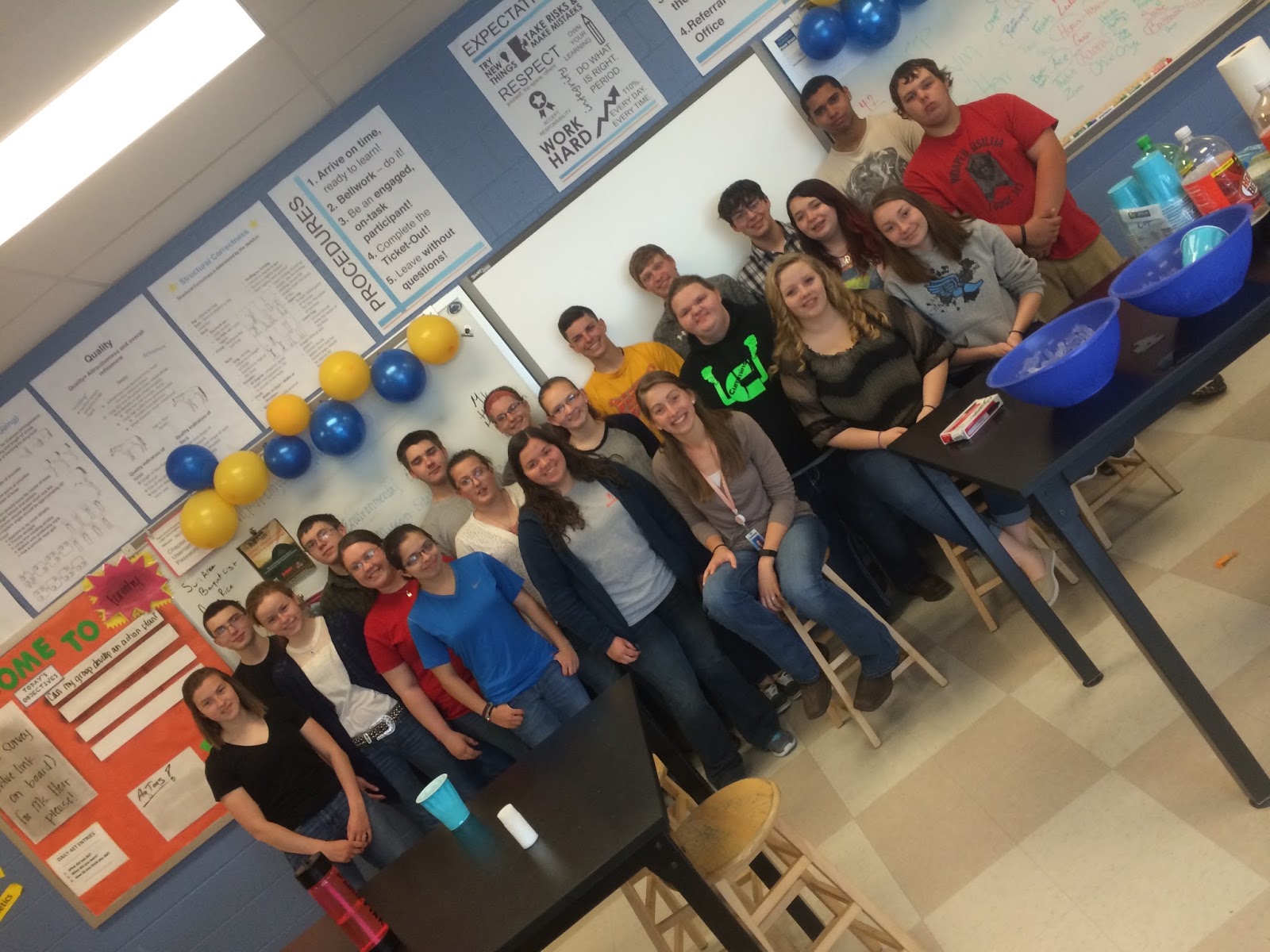
Simply put, it hardly seems real that graduation is only few days. It hardly seems real that this student teaching internship has come to a close. 

Simply put, I count myself so privileged to have the opportunity to watch these students grow and succeed. I count myself privileged to earn a Penn State education, to serve as temporary member of of the Midd-West Agriculture and Engineering Department, to be joining a profession with a nationwide network of passionate agriculture educators.

Until the Next Advent{HERR}, K. Janae

Wednesday, April 20, 2016

Teac{HERR} Tales: Mastery & Growth

As a 4-H alumnus, I'm naturally drawn to their motto: to make the best better. Despite long to-do lists, I am continually reminded that there is purpose behind each assignment that accompanies our student teaching internship. Many of them to quite simply, make the best, better. 

Now, please don't miss understand me. I am by no means writing this blog and boasting that I am already classified alongside the best and just working to be better. I've got work to do to get there, but assignments like the Action Based Research and Student Learning Objectives are designed to help to do just that. 

I worked alongside my cooperating teacher to develop my understanding of the Student Learning Objective, or SLO process early on in the semester. During which, we selected my Equine Science class and Horse Selection and Evaluation unit to focus my Action Based Research and SLO on. 

SLO's are based off of five components. Those components are strategically designed to help teachers identify an area of need and improvement in their classroom that they wish to intentionally improve. Results can be analyzed to serve as Action Based Research. These five components and how they fit for my SLO are shown below. 

1. Context
- This SLO was focused on 36 students enrolled in an Equine Science class in grades 9-12. This class is an every other day course that is 40 minutes long. 
2. Goal
- Students will classify, evaluate, select and manage animals based on anatomical and physiological characteristics
3. Measures
- Students will take a written pre-test, mid-term and final. They are designed to determine mastery at an initial level (pre-test) and mastery or growth of content knowledge and competency levels at the mid-point and final point of the unit
4. Indicators
- Students will achieve at least a 25% or higher on the pre-test, while on the mid-term and final student scores would increase by 25% of the pre-test score or achieve 100%
5. Expectations
- Scoring brackets were set to determine success. For example 0%-64% of students meeting the indicator targets equates to a failing status, 74%-91% is proficient and 92%-100% earning distinguished

Simply put, various factors played a role in the results that were determined during this assignment. Student awareness of assessments, student absence, every other day class schedules are just a few of the factors that surely influenced the results. 

Simply put, regardless of what school or state I teach in, I will surely be required to perform some form of an SLO or Action Based Research assignment. This was excellent practice, along with a great mentor!

Until the Next Teac{HERR} Tale, K. Janae

Monday, October 26, 2015

#TeachAgChat the Teac{HERR} Way!

We're all about this cool thing called PLN's here with #psuaged16. And by PLN I mean Professional Learning Network. As future educators, who are we to stop learning?! We owe it to our students to stay relevant, stay engaged  and stay improving.

I do not think it is coincidental that this infographic here also includes the importance of talking to "thought leaders" directly through various social media platforms like Twitter and that we are asked to lead a weekly twitter chat as a cohort on a topic that interests us.

I count myself privileged to have gotten to rock out the latest #TeachAgChat with my peers Jenna Timmons (@jitimmons) and Olivia Murphy-Sweet (@OSweetMurph). We discussed the "opportunities and challenges with technology regarding school based agriculture education."

For a first time twitter chat host, I was quite pleased with our results. We had 39 participants, 469 tweets and 306, 837 impressions.

I loved watching our guests enthusiastically discuss some awesome resources, explore unique ways to implement technology in the classroom and connect tech to 21st Century Skills. You can catch a glimpse at the questions we asked here.

To see some of the highlights from our #TeachAgChat, you can view our storify here.

Looking forward, here's a few thoughts for my peers, the future hosts of the #TeachAgChat...

  • Think carefully about the timing of your questions. I would argue that we had too many questions, I think it was hard for participants to follow along because it was moving so quickly and they were having some great dialogue about previous questions.
  • Actively engage with participants. Greet them as soon as the log in, comment, provide feedback and further resources, "call them out," ask follow up questions and thank them for their time. 
  • Introduce your experts so that participants know who they are. Ask them to bring their own resources and let them provide follow up and clarification to questions. We had some super knowledgable and passionate individuals, maximize their expertise!
  • Advertise your chat on like-type twitter chats. Since our topic was very centered around educational technology, we should have been advertising our #TeachAgChat on similar twitter conversations like #edchat, #edtechchat, etc. This way would could have conversed with experts outside of the agriculture education field. 


Join in on Thursday, November 5th at 8pm EST to chat about "integrating place-based environmental education in school-based agricultural education to improve environmental literacy." 

Simply put, twitter chats are pretty sweet way to expand your professional learning community, to become refueled and excited about the future of agriculture education.

Simply put, I'm thankful for innovative instructors who push us outside of our comfort zones for the sake of our professional well-being.

Catch you on the next #TeachAgChat, K. Janae